Terumah – Inside, Outside and In-Between

The aron habris, the holy ark described in the parshah, was essentially a wooden box set into a golden one, with another golden one set inside it (Yoma 72b).

The Gemara (ibid) sees in the aron, which contains the luchos, shivrei luchos and a Torah scroll, a metaphor for the coherence of conscience and behavior that defines a true scholar. “A talmid chacham,” Rava teaches there, “who isn’t tocho kiboro,” – whose inside [essence] isn’t like his outside [the image yielded by his behavior] – “isn’t a talmid chacham.”

My revered rebbe, Rabbi Yaakov Weinberg, zt”l, noted that the Gemara’s wording is pointed. We are not exhorted to bring our “outsides” into line with our “insides” – to first achieve purity of heart and then display its signifiers – but rather the other way around. We do right to first emulate the comportment and behavior of those more spiritually accomplished than we are – to present an image of observance and propriety – even if our souls may not be as pure as our clothing and actions seem to declare. 

That is because, in the Sefer Hachinuch’s words, “A person is affected by his actions” and demeanor. How we dress, speak and act can change who we are.

Achieving coherence of appearance and heart must be the ultimate goal for us all. But we shouldn’t feel hypocritical or despondent if, in the process of reaching that goal, we show the world a better image of ourselves than we deserve. What matters is only that we are working to bring our inner selves into line with our outer ones.

What’s more, according to a Midrash brought by Rashi on the posuk uvicheit yechemasni imi (Tehillim 51:7), Dovid Hamelech lamented the fact that when his parents conceived him, their intent was basically selfish (a thought reflected as well in his words ki avi vi’imi azovuni, Tehillim 27:10). And yet, Dovid’s father was Yishai, who, the Gemara  (Shabbos 55b) says was one of the humans who never sinned! 

The inescapable conclusion is that self-interest isn’t sin. The essential sense of self is inherent in being human, and no contradiction to righteousness. 

That, too, is reflected in the aron. It was gold within and without, yes, but there was wood (perhaps hinting to the eitz hadaas) between the golden layers. One’s toch and bar can be pure and consistent, but there is always a self in the middle. And that’s inherent in being human.

© 2026 Rabbi Avi Shafran

AI! AI! AI!

The very first images of Venezuelan president Nicolás Maduro being arrested by U.S. forces were AI-generated fakes. When President Trump shared an actual photo depicting Mr. Maduro in handcuffs and a blindfold, social media users and journalists weren’t sure it was real. A good example of the confusion sown by AI in news reportage.

To be sure, the fake images didn’t misportray what had happened. But there has been true havoc wreaked by less pedestrian imagery.

After federal immigration agents shot and killed two protesters last month in Minneapolis, Democratic Senator Dick Durbin displayed an enlarged photo of an ICE agent holding a gun against the back of the head of one, a man named Alex Pretti, who was down on one knee. It was an AI-altered image. Mr. Pretti was indeed killed in a scuffle but was not, as the photo seemed to show, summarily executed. (To his credit, though, Mr. Durbin, when informed of the provenance of the photo, apologized for inadvertently giving it publicity.)

Another manipulated photo of Mr. Pretti, who was a nurse, enhanced his facial features and portrayed him sympathetically by showing him assisting two rehabilitating veterans.

When, also last month, a group of protesters interrupted a church service in Minnesota, the White House posted a digitally altered image showing one of the demonstrators bawling as she was arrested. It was an AI-altered version of a photo of the woman looking entirely at ease.

The protest was an uncouth disturbance of a religious service. But the photo, still, was sheker.

As were those showing Representative Ilhan Omar smiling next to a man who had sprayed her with apple cider vinegar. That led to claims that the Congresswoman had staged the attack. President Trump echoed the idea on his social media platform.

Needless to say (or maybe not), there was no evidence that the attack, such as it was, was staged. The attacker, moreover, had previously made threats against Ms. Omar and has a history of online criticism against her.

There are more than enough reasons to excoriate Ms. Omar without resorting to sheker.

Then we had an A.I.-generated “newscaster” who reported that California Governor Gavin Newsom had laundered drug money for Mexican cartels. The “report” was reposted on President Trump’s Truth Social platform. And was, in case you might be wondering, entirely evidence-free.

Last October, an entirely convincing video showed a television reporter interviewing a Georgia woman about how she sold her food stamps for cash, which is a crime. The entire conversation was conjured from thin air (and AI). Neither the reporter nor the woman ever existed.

But the reaction to the video was entirely real, with some commenters railing against government assistance programs and others, since the interviewee was black, employing ugly racist tropes.

Fakes have been used to mock not only poor people but President Trump as well. One video showed an image of the White House with a voice-over that sounded exactly like Mr. Trump, berating his cabinet over the release of documents that showed his relationship with a disgraced criminal.

There was a time, a not-too-distant one, when AI-generated “memes” were obviously manufactured, no more misleading than a hand-drawn cartoon. Think the president as Superman or “Dark Brandon” Joe Biden with bright red laser eyes.

They were blatantly, silly caricatures, as anyone could see. Today, though, there are counterfeit images and entire fake videos that are indistinguishable from photos of real things and happenings that actually happened.

And, combined with a polarized, confirmation-biased and disturbingly gullible public, such evolved AI, while it might not spell the end of the human race as some fear, certainly presents an unprecedented challenge to emes.

Social conservatives and liberals alike, have utilized new AI technology to reach and fool the public. But the most aggressive use of AI to mislead seems to have come from one side of the political spectrum. It’s the side whose policies most of us, myself included, favor. But sheker is sheker, and we’re enjoined by the Torah to distance ourselves from it. Here, at least, we’re enjoined to recognize it and certainly to avoid becoming complicit in its dissemination.

The Far-Reaching Import of a Vav

Your Uber driver might be pleasant to you because he values another human being, but his desire for a four-star rating likely plays a larger role in his affability. 

A sure way to anger an atheist is to challenge him to explain why anyone should be pleasant, or ethical or moral – beyond the mere utilitarian gain of a social contract. He will jump up and down and insist that goodness and badness exist. But, in the end, without a Higher Power’s guidance, those words are utterly fungible.  Good and bad behavior, sans a Divine Guide, carry no more ultimate meaning than good or bad weather. And flowers appreciate thunderstorms.

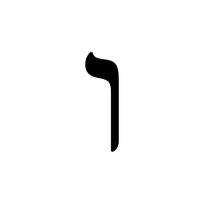
Parshas Mishpatim begins with the connection-letter vav, indicating that the laws that follow, many of them dealing with financial dealings, torts and other interpersonal matters, were, no less than the “Ten Commandments” and mizbei’ach laws of the previous parshah, “from Sinai,” as Rashi, quoting Midrash Tanchuma, notes.

Inherent in that vav-connector, says Rabbi Shlomo Yosef Zevin, is the fact that, for Jews, seemingly mundane business and interpersonal dealings are to be conducted ethically not as mere parts of a social contract but rather as the fulfilment of Divine command.

And, he continues, it is a distinction with a momentous difference. “Rivers of blood” have been spilled, he points out as an example, “up to and including the present,” as a result of human reinterpretation of “Thou shall not murder.”  

When killing, or stealing, or harming others are only man-made social constructs, ways will be found to sidestep them or “clarify” their application when deemed necessary. By contrast, one who accepts the Torah’s ethical laws as a divine charge will perforce treat them as truly binding and absolute, no matter what.

Those with the custom of saying a “lishem yichud” declaration of holy intent before putting on tefillin or taking an esrog and lulav in hand generally don’t do so before signing a contract or treating another person pleasantly.  

But there’s really no reason not to.

© 2026 Rabbi Avi Shafran

Riyadh Reversal

“Wherever Israel is present, there is ruin and destruction… Israel does not respect the sovereignty of states or the integrity of their territories, while working to exploit crises and conflicts to deepen divisions.”

Tucker Carlson? Candace Owens?

Nope. Not even Ms. Rachel. It’s from an editorial in our friends the Saudis’ official government’s newspaper Al-Riyadh earlier this month.

If anyone thought that the Saudi charm offensive and seeming outstretched-in-peace Arabian arm were signs that the desert kingdom was moving toward rapprochement with Israel and an embrace of the Abraham Accords, some further thinking might be in order.

Recent months have seen imams’ sermons at the Grand Mosque in Mecca – which are seen as reflecting official Saudi messages – express sentiments like those of Sheikh Saleh bin Abdullah bin Humaid, who, in his drasha, emplored his misguided conception of the Creator to “deal with the Jews who have seized and occupied, for they cannot escape Your power. Oh… send upon them your punishment and misery.”

Hussain Abdul-Hussain, a research fellow at the Foundation for Defense of Democracies, noted on a recent podcast that, whereas in the past, “you only got these crazy terrorist clerics, the al-Qaida types [who] would be inciting against the Jews,” of late, “the [Saudi] state-owned media” was engaging in incitement.

Barak Ravid, a correspondent for Axios, said that lately “the Saudi press is full of articles that include anti-Israeli conspiracies, anti-Abraham Accords rhetoric and even antisemitic language.”

Deborah Lipstadt, the former U.S. antisemitism envoy, said about the Saudi about-face: “If this is a real pivot, and not just a momentary detour… then it’s very disturbing.” She added that the shift “also has implications for the spread of hatred, Jew hate.”

It’s not clear what has driven the change for the worse. Michael Makovsky, president of the Jewish Institute for National Security of America, suggests that one factor may be the Trump administration’s friendly relations with Islamist leaders in Turkey, Qatar and Syria, which, he contends, sends a signal to the Saudis that you could take more Islamist positions, and it won’t hurt you with the United States.”

Edy Cohen, of the Israel Center for Grand Strategy, told Jewish Insider that he sees the Saudi shift as a sign of panic in the wake of the mass protests in Iran.

Saudi leaders, he says, “heard [exiled Iranian Crown Prince Reza Pahlavi] say the new Iran will normalize relations with Israel, and this drove the leadership crazy.”

“Imagine Iran and Israel together,” he explained. “The Shi’a and the Jews together; it’s their biggest nightmare.”

Others point to the increasing enmity between the House of Saud and the United Arab Emirates (UAE), the new face of moderation on the Arabian peninsula.

Once, not long ago, the two nations were on friendly terms, even working together in Yemen to curb Houthi influence there. But lately, the UAE has been a target of Saudi ire. Prominent Saudi columnist Dr. Ahmed bin Othman Al-Tuwaijri, for instance, wrote an article on a Saudi site attacking the UAE as “an Israeli Trojan horse in the Arab world … in betrayal of [G-d], His Messenger and the entire nation.”

After some backlash by American critics, the Saudi site took the article down. After further backlash, though, this from the Arab world, it went back online. Welcome to Arabia.

A surprisingly contrary voice was that of South Carolina Senator Lindsey Graham, as stalwart a conservative supporter of Israel and enemy of Islamism as the chamber has ever featured.

After meeting last week with Saudi Defense Minister Khalid bin Salman Al Saud and speaking by phone with Saudi Foreign Minister Faisal bin Farhan Al Saud, he said “After having met with the Saudis today, I understand their concerns better. I don’t agree with everything they’ve done, but I fundamentally believe that the vision is still the same.”

 “To all those who think like me and have been upset by what you’ve heard,” he continued, “I understand why you’re upset, but I would just say this: If I feel good, you should feel good.”

Brings to mind Ben Shapiro’s maxim, that “Facts don’t care about your feelings.”

Is the kingdom choosing Islamism or peace? Coming weeks’ Saudi sermons and media musings will tell.

© 2026 Ami Magazine

Mount-ing Tensions

It took years of complaints (mine among them) to The New York Times to get the Old Gray Lady to stop referring to Har Habayis as where the batei mikdash were “believed to have once stood,” and to respect reality by stating that “it is the site of two ancient temples.”

The paper even ran an “editor’s note” a few years back to clarify that “the headline and a passage” in an article had “implied incorrectly that questions among scholars about the location of the temples potentially affected Jewish claims to the site”; and that “unlike assertions by some Palestinians that the temples never existed,” there are no archeological findings that “challenge Jewish claims to the Temple Mount.”

Shkoyach. Chalk one up for history!

Unfortunately, the Beis Hamikdash doesn’t currently stand where it stood and where it will. And when the Har Habayis was captured along with the rest of Yerushalayim by Israel in 1967 during the Six-Day War, the Israeli government gave administrative control of the site to the Jordan-based Islamic trust known as the Waqf.

In keeping with the longstanding status quo that had prevailed until that point, Israel declared that only Muslim worship would be permitted on the Temple Mount. Israel’s leaders reasoned that changing the character of the site, where two Islamic edifices, the Dome of the Rock shrine and the Al-Aqsa Mosque, have long stood, would be seen by the Muslim world as a blatant affront. And so, to keep the peace, Israel allows only Islamic worship on the mount.

From a purely reasonable perspective, of course, prohibiting Jews from praying at Judaism’s holiest site is an absurdity. Reasonable perspectives, however, are rarities when it comes to the Middle East, and absurdities abound.

Israel’s decision to not change the character of the Temple Mount, discomfiting as it was, and remains, evidenced sensitivity and wisdom.

Neither of which are evident in the ongoing attempts by some to assert a Jewish presence on the Har Habayis.

Increasingly, groups of Jews have ascended the Har Habayis and prayed there. They are motivated, no doubt, by fealty to history and Jewish pride, but their actions, nonetheless, are provocations. And gifts to Muslim extremists the world over who loathe Israel and Jews, and who are on constant lookout for any event, however tenuous, that they can portray as insulting to their faith.

And indeed, each time a group of Jews enters the compound, Arab media screamingly condemn what they laughably call “stormings” of the site.

No, they’re not stormings. But neither are they justifiable.

The “stormers” reject the opinion of gedolei Yisrael and the consensus view of Israel’s chief rabbis that Jews are barred by halachah from entering the compound. In 1967, the Israeli Chief Rabbinate ordered that a sign be posted at the Mughrabi Gate, the entrance to the Har Habayis for non-Muslims, warning that “According to Torah Law, entering the Temple Mount area is strictly forbidden due to the holiness of the site.”

But even those who rely on minority halachic rulings they say permit them to stand on part of the compound need to realize that not everything that’s permitted is necessarily wise. And asserting a Jewish presence on the Har Habayis today, in the context of raging global Israel-hatred, most certainly is not. The ascenders to the mount might feel inspired by standing on the holiest ground on earth, but there are 2 billion Muslims who, to put it delicately, don’t want them there.

Most recently, a small group of Jews entered the compound carrying a “Guide Page for the visitor to the Temple Mount,” newly published by the “Temple Mount Yeshiva.” Alongside instructions for visitors, the page pointedly includes the Shemoneh Esrei.

The man who heads the Temple Mount Yeshiva told Haaretz that he hopes the next stage will be the introduction of regular siddurim, and Jews wearing taleisos and tefillin.

To be sure, a new era of history will ensue when, in the navi Yeshayahu’s words, “a wolf and a lamb shall graze together,” when the entire world will recognize that Moshe emes viToraso emes.

But we’ve clearly not arrived there yet. And, in the interim, we are enjoined to not goad or incite other peoples or religions. That directive might be vexing, but doing the right thing often is.

(c) 2016 Ami Magazine

Yisro – The Barrel’s Secret

Our ancestors’ acceptance of the Torah was imperfect: It included an element of coercion. 

The Gemara (Shabbos 88a) teaches that “Hashem held the mountain over the Jews’ heads like a gigis (barrel).” The Maharal explains that the stunning nature of the experience, the terrifying interaction of human and Divine, left no opportunity for full free will. Directly interacting with Hashem, how could one possibly refuse?

And that “coercion” remained a moda’ah, a “remonstration,” against Klal Yisrael, the Gemara teaches, until… the events commemorated by Purim.

In the time of Esther, the Jews chose, without being forced, entirely of their own volition, to perceive Hashem’s presence where – diametric to the Sinai experience – it was anything but obvious.  Instead of seeing the threat against them in mundane terms, Persia’s Jews recognized it as Hashem’s message, and responded with prayer, fasting, and repentance. 

And so, by freely choosing to perceive Hashem’s hand in the happenings, they supplied what was missing at Sinai, confirming that the Jewish acceptance of the Torah was – and is – wholehearted and sincere. 

The Gemara’s image of Hashem “holding the mountain over their heads” at Sinai is a striking metaphor. But why “like a barrel”? Isn’t a mountain overhead compelling enough?  Who ordered the barrel?

One of the ways a person’s true nature is revealed, Chazal teach, is “b’koso” – “in his cup” – in his behavior when his inhibitions are diluted by drink (Eruvin, 65b).

On Purim, in striking contrast to the rest of the Jewish year, we are enjoined to drink wine to excess.  And what emerges from that observance, at least among Jews who approach the mitzvah properly, is not what we usually associate with inebriation, but rather a holy, if uninhibited, mode of mind.

Thus the revelation of our true nature provided by the Purim-mitzvah perfectly parallels the revelation of the Jews’ wholehearted acceptance of Hashem that took place at the time of the Purim events.  With our masks (another Purim motif, of course) removed, we show our true selves.

In Pirkei Avos (4:20), Rabbi Yehudah HaNasi teaches us not “to look at the container, but at what it holds.” 

A gigis, throughout the Talmud, contains an intoxicating beverage.  

Hashem doesn’t look at the container – the coercion symbolized by the barrel held over our ancestors’ heads – but rather at how Jews act when they have imbibed its contents. He sees not our ancestors’ lack of full free will at the Sinai experience but the deeper truth about the Jewish essence, the one revealed by Purim’s wine.

© 2026 Rabbi Avi Shafran

Bishalach – Arms Race

Stripped of all of history’s dross, the fundamental struggle of humanity is between two views: The recognition of a Creator (and the resultant meaningfulness of human life) and the belief that life is the product of mere chance and, hence, essentially pointless.

It is the worldview-struggle between Klal Yisrael and Amalek, introduced at the end of this week’s parsha in a military showdown.

We read how the Amalekites attacked the Jews after our ancestors’ exodus from Egypt, and how Moshe Rabbeinu, from a distance, influenced the course of the battle. 

“When Moshe lifted his arm, Yisrael was stronger; and when he lowered his arm, Amalek was stronger.” (Shemos 17:11)

The name Amalek, whose final letter is“kuf,” can be parsed as “amal kof” — the “toil of a monkey.” (Kuf and kof are spelled identically, and kof meaning monkey is found, in its plural form, in Melachim I, 10:22 and in Divrei Hayamim II, 9:21.)

Ki adam l’amal yulad — “For man is born to toil” (Iyov, 5:7).  We humans are here l’amal, for toil, to work to rise above our base natures and serve our Creator according to His will. Our lives have ultimate meaning. This is the credo of Yisrael.

Amalek, by contrast, sees man as a mere product of chance happenings and random mutations, with no more inherent worth than any animal, including his closest “relative,” the ape.

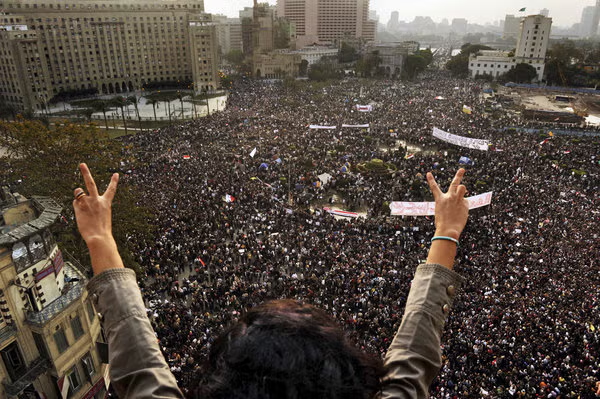
Curiously, and perhaps significantly, only two creatures are able to lift their arms above their heads: apes and humans.

Might Moshe’s raised arms during the Amalek-Yisrael battle signify Yisrael’s anti-Amalek conviction, that there is a G-d in heaven?  

Amalek, too, denying the divine, can raise its arms, but its gesture is meaningless. It is a monkey’s mere, and quite literal, aping of what Yisrael is doing when it raises  its arms heavenward. 

Amalek’s “toil” is amal kof, that of a monkey, using its arms only to swing from vine to vine, without any higher aim than getting from here to there. 

The pan-historical Yisrael-Amalek struggle is thus a pitting of dedication to Hashem, signified in our parsha by Moshe’s raised arms, against the meaningless toil of human creatures who deny what being human truly means.

While we cannot know the identity of the Amalekites today, the philosophy identified with that people is everywhere around us.  But Yisrael and its understanding of life’s meaningfulness will prevail in time.

© 2026 Rabbi Avi Shafran

Walz Washout

Much attention has been given to the ascension of Zohran Mamdani to the mayoralty of New York City. 

But whether the future of the left wing of the Democratic Party is more accurately presaged by the election of a radical as mayor than by the downfall of a progressive governor is far from clear.

To read what I’m referring to, please click here.